
Dr Yee Sze-Voon – Brain & Spine Neurosurgeon In Malaysia
Find By 365Asia Preferred Doctor Partner Programme
Dr Yee Sze-Voon - Brain & Spine Neurosurgeon In Malaysia
Specialist in Neurosurgery

At-a-Glance
Dr Yee Sze-Voon is a Consultant Neurosurgeon at KPJ Damansara Specialist Hospital. He subspecialises in endoscopic and minimally invasive spine surgery, brain surgery, and pain management.
✔ Areas of Expertise: Endoscopic and minimally invasive spine surgery, slipped disc, sciatica, spinal stenosis, cervical myelopathy, brain tumours, brain haemorrhage, hydrocephalus, trigeminal neuralgia, MRI / CT second opinion and clinical correlation.
✔ Language: English, Bahasa Melayu, Mandarin, Cantonese
✔ Practicing At: KPJ Damansara Specialist Hospital
Know Before You Go: Patients are typically mobilised within 4–6 hours post-op, with an average hospital stay of approximately 1.5 days.
the vision
Precision When Needed, Clarity Always
“Not everyone who sees a neurosurgeon needs an operation. In many cases, the most important thing I can offer is not a procedure – it is clarity. Understanding what is happening in your brain or spine, why it is happening, and what your options genuinely are. That conversation changes how patients make decisions, and it changes outcomes. Surgery is one of the tools available to me. When it is indicated, the goal is precision. It is not the starting point.”
– Dr Yee Sze-Voon
Get To Know Dr Yee Sze-Voon
Dr Yee Sze-Voon is a Consultant Neurosurgeon practicing at KPJ Damansara Specialist Hospital in Petaling Jaya, Selangor, Malaysia. He subspecialises in endoscopic and minimally invasive spine surgery, brain surgery, and pain management. He underwent further advanced endoscopic spine surgery training in Seoul, South Korea, learning under experienced endoscopic spine surgeons with a strong focus on careful case selection, imaging correlation, and deploying minimally invasive techniques where clinically appropriate.
Dr Yee’s practice covers both brain and spine conditions on equal footing. He assesses a comprehensive range of neurological and spinal issues, including brain tumours, brain haemorrhage, hydrocephalus, persistent headaches, seizures, and trigeminal neuralgia, as well as complex spine conditions like slipped discs, sciatica, spinal stenosis, and cervical myelopathy.
Whether a patient presents with a new brain MRI finding, a seizure, persistent headaches, back pain, or progressive neurological symptoms, Dr Yee’s approach remains consistent: accurate diagnosis first, followed by an honest, transparent discussion of all available options. Where surgery is indicated, his aim is always to deliver precise, appropriate, and minimally invasive intervention.
What Is His Ethos In Medicine?
Dr Yee believes that the cornerstone of neurosurgery is providing total clarity before any procedure is considered. He views surgery not as a starting point, but as a precise tool to be used only when truly necessary, placing an honest diagnosis and transparent guidance at the very heart of patient care.
Publications
- Review of CHESS Score in SAH Patients in Local Malaysian Population Journal of Neurosciences in Rural Practice, 2020
- Commentary: Demonstration of Microsurgical Technique and Nuances for the Resection of a Midbrain Tectal Glioma via the Transcollicular Approach: 3-Dimensional Operative Video
Operative Neurosurgery, 2021 - Commentary: Tractography-Guided Anterior Capsulotomy for Major Depression and Obsessive-Compulsive Disorder: Targeting the Emotion Network
Operative Neurosurgery, 2021 (co-author) - Pediatric Intracranial Aneurysm: A Case Report
Conference Paper, 2014
Related Content
10 Questions & Answers
1. What inspired you to pursue a career in neurosurgery?
Neurosurgery is a field where clinical precision directly intersects with human life in a profound way. The sheer complexity of the brain and spine demands a high level of technical mastery, but what truly drew me to this specialty is the opportunity to give clarity to patients in their most anxious moments. Being able to guide someone through a scary diagnosis and help them restore their quality of life—whether through complex surgery or simply reassuring them that surgery isn’t needed—gives me immense purpose.
2. When should patients consider consulting a neurosurgeon?
Many people assume you only see a neurosurgeon when you are ready for an operation, but that isn’t the case. You should consider a consultation if you have new or persistent brain or spine symptoms such as severe or worsening headaches, a first-ever seizure, persistent arm or leg nerve pain, or limb weakness and walking instability. It is also wise to seek a review if you have received a new brain or spine MRI finding, so we can accurately correlate what the scan shows with how you actually feel.
3. How do you stay current with the latest advancements and research in your field?
Medicine evolves rapidly, particularly in neurosurgery and minimally invasive spine care. I place a strong emphasis on continuous subspecialty training such as undergoing focused fellowship training in endoscopic spine surgery in Seoul, South Korea, to learn directly from master surgeons. I regularly refine my techniques in advanced minimally invasive procedures and stay engaged with ongoing clinical research to ensure my patients receive modern, safe, and evidence-based care.
4. What is your patient care philosophy?
My philosophy is rooted in a simple principle: Not everyone who sees a neurosurgeon needs an operation. Consultation is not a commitment to surgery; it is an effort to gain clarity. My approach is always accurate diagnosis first, followed by an honest, transparent discussion of all available options. Surgery is a powerful tool, but when it is indicated, the goal is targeted precision—it is never the default starting point.
5. Can you describe any particular patient success stories or challenging cases that had a significant impact on your approach to neurosurgery?
Cases involving patients who come in terrified by an abnormal MRI report leave a lasting impression on me. I often see individuals suffering from severe back or neck pain who fear they will lose their mobility or require major surgery. Being able to perform a targeted, minimally invasive procedure or using endoscopic techniques that relieve their nerve pain with minimal tissue disruption and watching them return to walking comfortably without pain reminds me why careful case selection and precision intervention matter so much.
6. What are some common misconceptions or myths about brain and spine health that you often encounter, and how do you address them with your patients?
The biggest myth I encounter is that ‘an abnormal MRI finding automatically means you need surgery.’ Patients often see a scan report mentioning a disc bulge or an incidental lesion and assume the worst. I address this by explaining that we treat the patient, not just the scan. An MRI finding must always be interpreted alongside a physical examination to see if it actually matches your symptoms. Many incidental scan findings can be safely monitored without any invasive procedure.
7. How do you ensure patients have a good understanding of their treatment choices?
I break down complex medical concepts into clear, straightforward language without overwhelming medical jargon. During a consultation, we walk through the step-by-step pathway: reviewing symptom history, performing a physical examination, and looking at the MRI films together. I explain what is happening in their brain or spine, why it is happening, and what the clinical reasoning is behind every option whether that is conservative monitoring, medication, pain procedures, or surgery.
8. How do you maintain a work-life balance to stay refreshed and engaged with your patients?
Neurosurgery requires intense focus, patience, and emotional resilience. To stay fully engaged and present for my patients, I prioritise structured routine, continuous self-care, and spending meaningful time outside the clinic. Maintaining balance allows me to bring warmth, empathy, and clear decision-making to every single consultation.
9. In your opinion, what are some of the most exciting developments or technologies currently emerging in the field of neurosurgery?
The shift toward ultra-minimally invasive techniques specifically endoscopic spine surgery and advanced intracoronary/intracranial visualization tools is incredibly exciting. Using high-definition cameras and specialized instruments through tiny incisions allows us to decompress nerves and treat pathology while causing minimal disruption to surrounding healthy muscles and tissue. This translates to less post-operative pain, lower complication risks, and significantly faster recoveries for patients.
10. Can you share any advice on how people can take steps to prevent neurological conditions early for timely treatment?
Pay close attention to subtle signals from your body, but also know when a symptom requires immediate action. For general spine health, maintaining core strength, good posture, and taking physical breaks goes a long way. However, if you experience progressive numbness, limb weakness, balance issues, or severe, sudden-onset headaches, do not ignore them or delay seeking medical evaluation. Early specialist assessment allows us to intervene when conditions are easiest to manage.
Reviewed Articles
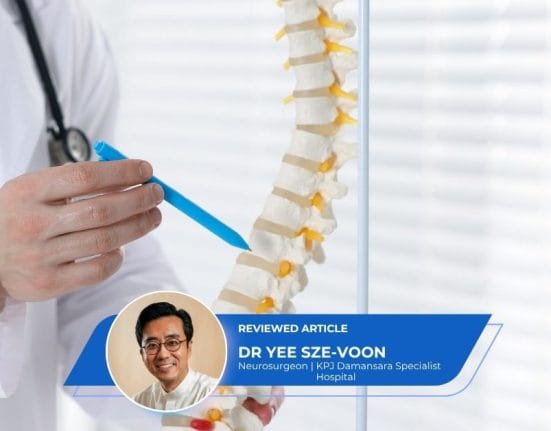

Understanding Sciatica Pain in Malaysia: Causes, Red Flags, and Treatment Options
- September 3, 2026
- 6 minutes read
- 128 Views
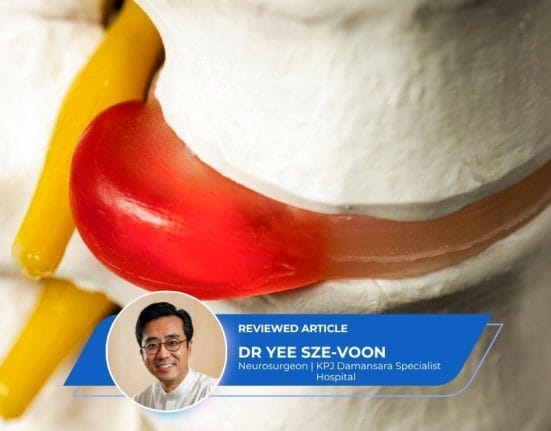
“My Spine MRI Shows a Slipped Disc”: Do You Always Need Surgery? A Neurosurgeon in Malaysia Explains
- September 3, 2026
- 9 minutes read
- 126 Views
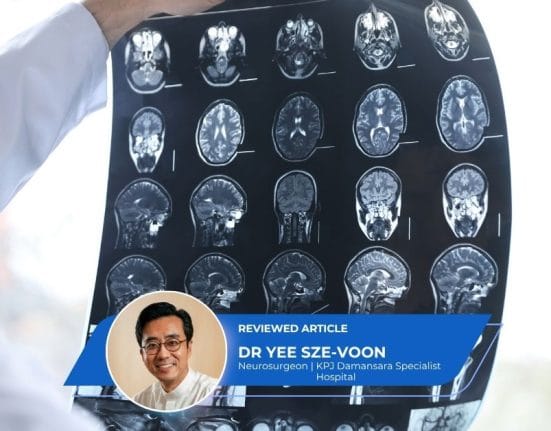
Abnormal Brain MRI or CT Findings: What to Do When an Incidental Lesion is Found
- September 3, 2026
- 5 minutes read
- 130 Views
All content on this site is informative only and is not intended to be a substitute for professional medical advice,
diagnosis, or treatment, and should never be relied upon for specific medical advice.
If you are experiencing a medical emergency, call 999 immediately or go to the nearest Accident & Emergency department.
365Asia is a member of Group 365Asia.