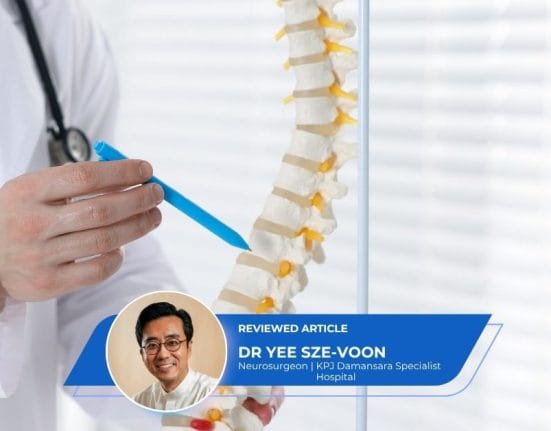
Receiving a Magnetic Resonance Imaging (MRI) report showing a “slipped disc” can sound alarming. “Slipped disc” is a common, non-medical term that can refer to various disc changes, including disc bulging or disc herniation. These findings are not interchangeable, and an abnormal scan does not automatically mean that surgery is required.
In clinical practice, an MRI finding is not, by itself, an indication for surgery. A spine scan is a diagnostic tool that must always be carefully correlated with your actual physical symptoms, a neurological examination, and daily functional limitations.
Although slipped or herniated discs can occur in both the neck and lower back, this guide focuses primarily on lumbar disc herniation and sciatica, which are among the most common spinal presentations seen in clinical practice.
Understanding how spine specialists in Malaysia interpret MRI results—and knowing the full spectrum of non-surgical and surgical treatment options available—can help you make informed decisions about your spinal health.
Back To: Brain and Spine Care Main Page
Quick Answer: Does a Slipped Disc on an MRI Mean You Need Surgery?
No. An MRI showing a slipped or herniated disc does not automatically mean that you need surgery. Most people with symptomatic lumbar disc herniation improve without an operation. Surgery may be considered when symptoms remain disabling despite appropriate non-surgical treatment or when serious neurological problems, such as progressive weakness or cauda equina syndrome, require urgent assessment and intervention.
The MRI finding should always be interpreted alongside your symptoms, neurological examination and functional limitations.
What Does a “Slipped Disc” on an MRI Actually Mean?
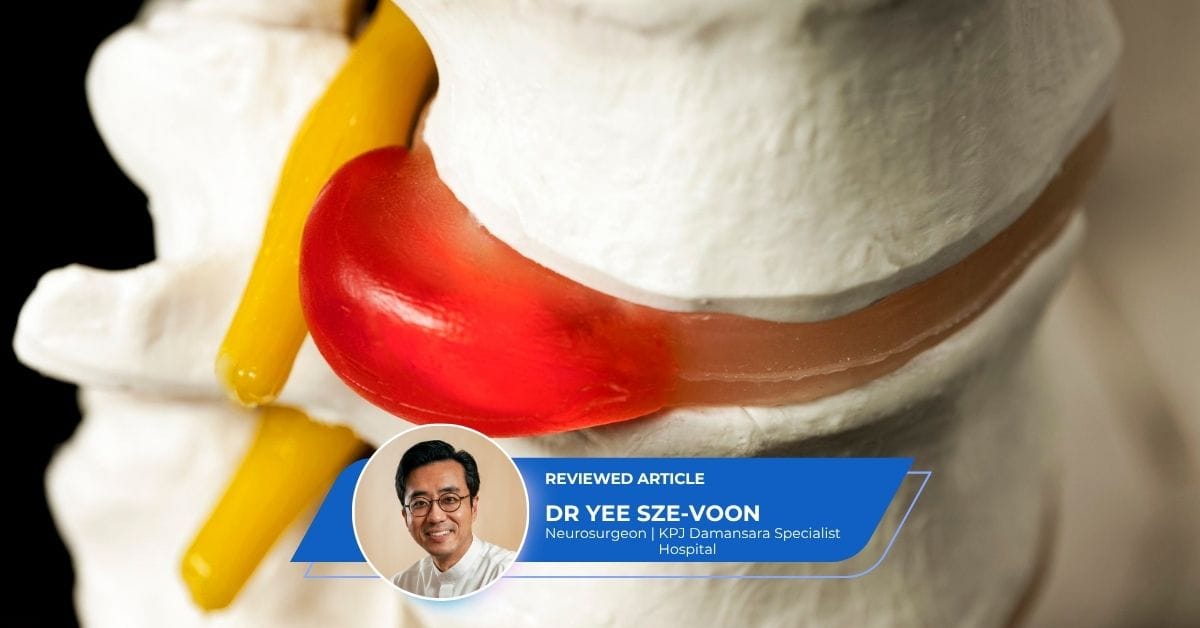
The intervertebral disc acts as a shock-absorbing cushion between the bones (vertebrae) of your spine. It consists of a tough outer layer (annulus fibrosus) surrounding a gel-like inner core (nucleus pulposus).
When a scan shows a disc issue, the specific nomenclature used by radiologists matters:
Understanding Types of Disc Pathology:
- Disc Bulge: A broad extension of disc tissue beyond the normal margins of the disc space. Disc bulges are common, particularly with age-related changes, and are not technically classified as disc herniations.
- Disc Herniation: A more focal displacement of disc material (which may include inner gel, cartilage, or outer disc tissue) beyond the normal disc space.
- Protrusion & Extrusion: Two recognised forms of disc herniation describing different structural patterns of displaced disc material.
- Disc Sequestration: A specific subtype of disc herniation where a fragment of displaced disc material has broken free entirely from the main disc structure into the spinal canal.
The Critical Rule: Imaging vs. Symptoms
It is common for individuals with no back or neck pain at all to show disc bulges or mild herniations on an MRI scan. Radiology findings must always be evaluated alongside clinical presentation:
- Asymptomatic Disc Findings: An abnormal scan in someone without relevant symptoms does not necessarily require medical treatment. The finding should always be interpreted in the context of the individual’s overall clinical picture.
- Symptomatic Nerve Compression: Pain radiating down the leg (sciatica) or arm (radiculopathy), accompanied by numbness, tingling, or localised muscle weakness, indicates that displaced disc material is actively irritating or compressing a nerve root.
Do You Always Need Surgery for a Slipped Disc?
For the majority of people with a symptomatic lumbar disc herniation and sciatica, the answer is no. Most individuals improve over time, as the body’s natural inflammatory and immune responses can reduce local nerve irritation and gradually shrink or resorb displaced disc material.
Clinical guidance notes that approximately 9 in 10 people with sciatica or radiculopathy improve with time, although the pace and extent of recovery vary between individuals.
Conservative (Non-Surgical) Treatment Options
When there are no urgent neurological concerns, non-surgical treatment is often considered first and should be individualised according to the patient’s symptoms, examination findings and functional needs.
1. Pain Management & Medications
Medication choices should be individualised by the treating doctor based on the patient’s specific symptoms, medical history, and potential side effects:
- Analgesics & Anti-Inflammatory Agents: Short courses of NSAIDs or standard analgesics may be considered for acute pain, though their risks and benefits must be assessed individually.
- Individualised Prescriptions: Some medicines traditionally used for neuropathic pain, such as gabapentin or pregabalin, are not recommended for routine treatment of sciatica under current NICE guidance, although medication decisions should always be individualised by the treating doctor.
2. Specialist Physiotherapy & Rehabilitation
- Individualised Exercise: Encouraging normal activities and structured exercise helps maintain mobility and function. A physiotherapist may prescribe exercises adapted to physical findings and tolerance.
- Core Strength & Posture: Targeted strengthening exercises may help improve muscle endurance, movement, and physical function, alongside ergonomic adjustments for work and daily routines.
3. Targeted Spinal Injections
If severe symptoms restrict physical function or delay rehabilitation progress, interventional pain procedures may be considered:
- Epidural Steroid Injections: Delivering anti-inflammatory medication into the epidural space under imaging guidance (such as fluoroscopy) can provide short-term pain relief in selected patients with severe radicular symptoms.
- Selective Nerve Root Blocks: Targeted injections that may help reduce nerve-root-related pain and, in selected cases, help identify the source of symptoms.
When May Surgery Be Considered?
While non-surgical care is the initial approach for most patients, surgical consultation or intervention becomes necessary in specific clinical scenarios.
Red-Flag Symptoms That Require Urgent Medical Assessment
- Cauda Equina Syndrome: New urinary retention, loss of bowel or bladder control, or numbness in the saddle area (including the genitals, buttocks, and inner thighs). This is a medical emergency requiring urgent evaluation and, where confirmed and clinically appropriate, emergency surgical decompression.
- Progressive Neurological Weakness: Rapidly worsening muscle weakness, such as an inability to lift the foot while walking (foot drop) or severe arm weakness.
- Elective Indications:
- Persistent Disabling Pain: Severe pain that fails to improve after an appropriate trial of non-surgical care.
- Functional Impairment: Ongoing symptoms that significantly restrict daily mobility, sleep, or the ability to work.
Elective Surgical Timing
For people without urgent red-flag symptoms, the appropriate duration of non-surgical treatment varies. There is no rigid, universal deadline; decisions depend on the severity and persistence of pain, neurological findings, functional impairment, and individual response to non-operative treatment.
Key Takeaway: An MRI Does Not Automatically Mean Surgery
A disc abnormality on an MRI does not, by itself, mean that surgery is necessary. The significance of the finding depends on whether it corresponds with your symptoms and clinical examination.
For many patients, symptoms improve with time and non-surgical treatment. However, persistent disabling symptoms, significant neurological problems or emergency conditions may require assessment by a spine specialist and, in selected cases, surgery.
When Should You See a Neurosurgeon for a Slipped Disc?
You may wish to seek a neurosurgical opinion if your MRI findings correspond with persistent or severe symptoms, particularly radiating nerve pain, numbness or weakness.
A neurosurgical assessment is particularly important if symptoms are worsening or significantly affecting your mobility, sleep, work or daily activities. Urgent medical assessment is required if you develop new urinary retention, loss of bladder or bowel control, numbness in the saddle area or rapidly worsening muscle weakness.
A neurosurgeon can review your MRI together with your symptoms and neurological examination to determine whether continued non-surgical management, further investigation or surgery may be appropriate.
Surgical Approaches Available in Malaysia
When surgery is clinically indicated, modern techniques focus on relieving nerve compression while preserving surrounding structural stability.
| Surgical Approach | Primary Technique | Considerations |
| Microdiscectomy | A well-established surgical technique using an operating microscope or loupes to remove disc material compressing a nerve. | Performed through a small incision. Often provides significant relief of radiating leg pain in appropriately selected patients. |
| Endoscopic Spine Surgery | A minimally invasive technique using an endoscope equipped with a camera and dedicated working channels. | Uses small working ports to access disc material. May be suitable for selected disc herniations depending on their location, spinal anatomy and surgeon assessment. |
| Open Decompression or Fusion | Open decompression relieves pressure on neural structures. Fusion is a separate procedure involving spinal instrumentation where clinically indicated. | Fusion may be considered for selected patients with spinal instability, severe deformity or other complex structural conditions. |
Slipped Disc Treatment Costs in Malaysia
Treatment costs in Malaysia vary depending on whether care is accessed through public or private healthcare facilities.
In private medical centres, overall expenses depend on:
- The complexity and level of treatment required (outpatient care vs. inpatient surgery).
- The specific surgical technique, length of hospital stay, and requirement for specialised implants or equipment.
- Surgeon and anaesthetist professional fees.
Because published package prices vary across private hospitals, patients are advised to request a formal, itemised cost estimate directly from their attending hospital prior to elective procedures.
Private Medical Insurance and Takaful Coverage
Many private medical insurance and takaful plans in Malaysia may cover medically necessary hospitalisation and surgical care for eligible spinal conditions. However, coverage is governed strictly by individual policy terms:
- Pre-Authorisation / Guarantee Letter (GL): Depending on the policy and insurer, non-emergency admissions or procedures may require pre-authorisation or a Guarantee Letter (GL).
- Policy Terms & Pre-Existing Conditions: Patients should check their policy details regarding definitions of pre-existing conditions, waiting periods, annual or lifetime limits (where applicable), and panel hospital requirements before proceeding with elective care.
Seeking a Specialist Opinion in Malaysia
In Malaysia, spinal conditions may be assessed and managed by neurosurgeons or orthopaedic surgeons with appropriate subspecialty training in spine care.
When seeking an expert consultation:
- Choose a specialist who performs a comprehensive physical and neurological examination alongside reviewing your MRI scans directly.
- Discuss the full range of management options, ensuring that treatment recommendations align with your specific symptoms, functional goals, and overall health status.
Neurosurgeons in Malaysia You May Consider
Choosing the right specialist is a critical step in your recovery. Some Neurosurgeons in Malaysia that you may consider for diagnosis and treatment:


Featured Doctor - Dr Yee Sze-Voon
For inquiries or for an introduction to a specialist, contact us below.
Frequently Asked Questions (FAQs)
1. Can a slipped disc improve without surgery?
Yes. Most people with symptomatic lumbar disc herniations experience significant improvement without surgery. Over time, localised inflammation subsides, and the herniated disc material may gradually shrink or be resorbed by the body.
2. Does an MRI showing a disc bulge mean I should stop exercising?
Not necessarily. Prolonged bed rest is generally not recommended, as it can contribute to loss of muscle strength and stiffness. While activities that aggravate severe symptoms should be modified temporarily, staying active within your tolerance and following guidance from a doctor or physiotherapist is recommended.
3. What is the difference between a disc bulge and a herniated disc on an MRI?
A disc bulge is a broad extension of disc tissue beyond its normal boundary and is not technically classified as a disc herniation. A disc herniation involves a more focal displacement of disc material beyond the normal disc space.
4. How long should non-surgical treatment be tried before considering surgery?
For people without emergency neurological symptoms, non-surgical treatment is typically tried first. The duration varies depending on symptom severity, neurological findings, functional limitations, and individual response to care. Persistent disabling pain despite appropriate non-surgical management may prompt a surgical consultation.
5. What is the expected return-to-work timeframe after spine surgery?
Return-to-work timing varies based on the specific procedure, individual recovery rate, and job demands. While some patients with uncomplicated recoveries from minor procedures may return to desk work within a few weeks, physically demanding roles usually require a longer, structured rehabilitation period.

This medical content has been reviewed by Dr Yee Sze-Voon, a Consultant Neurosurgeon specialising in brain and spine surgery, minimally invasive procedures, and pain management. His commitment to precise diagnosis and patient-centred care makes him a trusted specialist for comprehensive neurological health.
All content on this site is informative only and is not intended to be a substitute for professional medical advice,
diagnosis, or treatment, and should never be relied upon for specific medical advice.
If you are experiencing a medical emergency, call 999 immediately or go to the nearest Accident & Emergency department.
365Asia is a member of Group 365Asia.