



Kuala Lumpur Private Healthcare & Medical Tourism Guide
Kuala Lumpur (KL) is Malaysia’s premier destination for complex tertiary medical procedures, advanced surgical interventions, and integrated medical retreats. Renowned for flagship private hospitals, internationally accredited specialists, and seamless flight connectivity via Kuala Lumpur International Airport (KLIA), KL serves regional and global patients seeking top-tier care combined with exceptional value.
Health Screening in Kuala Lumpur, Malaysia: Packages, Costs & Guide | 2026
- September 15, 2026
- 376 Views
- Reading Time: 9 minutes
Guides
Why Choose A Private Hospital In Kuala Lumpur, Malaysia?
Getting a health screening or undergoing specialized treatment at a private hospital in Kuala Lumpur offers several advantages, especially for patients from Singapore and Indonesia seeking high-quality clinical care at highly competitive rates.
- Access To Specialist Care: Kuala Lumpur is home to many reputable private hospitals featuring an extensive network of experienced medical specialists. Patients can conveniently access advanced diagnostic services, sub-specialty care, and consultations with internationally trained doctors across multiple disciplines, including cardiology, oncology, orthopaedics, and reproductive medicine.
- Comprehensive And Modern Facilities: Private hospitals in Kuala Lumpur are equipped with modern medical technology, high-resolution diagnostic imaging, and well-established clinical teams. Many facilities maintain prestigious international accreditations, offering comprehensive screening and surgical options within a secure and comfortable environment.
- Value For Money: Healthcare costs in Kuala Lumpur are significantly lower than in Singapore, whilst maintaining stringent medical standards overseen by the Ministry of Health Malaysia. This structural cost advantage makes KL an exceptionally attractive option for those seeking affordable yet reliable healthcare services.
- Ease Of Travel: Kuala Lumpur is exceptionally well-connected and accessible. Singaporeans can take short 1-hour flights or cross-border transport, while direct flights regularly serve passengers from major Indonesian hubs such as Jakarta, Surabaya, and Medan. This geographical proximity allows international patients to plan their health screenings or medical procedures with minimal disruption to their daily schedules.
Private Hospital In Kuala Lumpur, Malaysia You Can Consider
If you are looking for hospitals in Kuala Lumpur, Malaysia for health screening, medical imaging, or other medical services, below are some private healthcare providers in Kuala Lumpur that you can consider:
Hospitals

Thomson Hospital Kota Damansara
Sunway Medical Centre
KPJ Tawakkal KL Specialist Hospital
KPJ Damansara Specialist Hospital 2 (DSH2)
KPJ Ampang Puteri Specialist Hospital
Hospital Picaso
Gleneagles Hospital Kuala Lumpur
Cardiac Vascular Sentral (CVSKL)
Featured Doctor - Dr Yee Sze-Voon
Medical Centres
Find A Doctor
Concerned about your health? Consider seeking professional Kuala Lumpur treatment from a qualified specialist. During your consultation, the doctor will assess your condition and explain the available treatment options, depending on your individual needs.

Featured Doctor - Dr Yee Sze-Voon
View more specialists in Kuala Lumpur on Find by 365Asia.
For inquiries or for an introduction to a specialist or hospital and medical centre, contact us below.
Common Healthcare Services Offered in Kuala Lumpur
Cancer Health Screening & Advanced Oncology Care
KL private medical centers deliver end-to-end oncology services ranging from early screening to precision cancer therapies. Facilities are equipped with total-body PET-CT, 3T MRI, linear accelerators, CyberKnife radiosurgery, and genetic testing labs for targeted therapy. Top institutions like Prince Court, Sunway Medical, and Gleneagles KL offer fast turnaround diagnostic reports.
Comprehensive Women’s Health & Reproductive Medicine (IVF)
Kuala Lumpur is a leading regional hub for fertility treatments and specialized gynaecology. Singapore residents and local patients frequently seek KL specialist centers for In-Vitro Fertilization (IVF), Intracytoplasmic Sperm Injection (ICSI), laparoscopic gynaecological surgery, and well-woman screening packages.
Men’s Health Screening
Specialised health screenings focusing on cardiovascular risk, prostate health, and metabolic wellness. Key checks include Prostate-Specific Antigen (PSA) blood tests, stress electrocardiograms (Treadmill ECG), testosterone profile testing, and liver/kidney metabolic panels.
STD & HPV Testing & Vaccinations
Confidential and rapid sexual health services provided in private clinical settings. Services include comprehensive STD blood/urine screening panels, anonymous consultation options, and Gardasil-9 HPV vaccination packages with fast digital result delivery.
Cosmetic Surgery & Medical Aesthetics
Reconstructive and cosmetic procedures performed by board-certified plastic surgeons and MOH-licensed aesthetic doctors. Services range from rhinoplasty, breast reconstruction/augmentation, and liposuction to non-surgical medical laser, Pico Laser, Botox, and dermal fillers.
Restorative & Cosmetic Dentistry
Full-mouth oral restoration, custom porcelain veneers, clear aligners, and surgical implantology utilizing modern dental technology in sterile, hospital-grade environments.
Cost Comparison (Singapore vs. Kuala Private Healthcare)
Below is an estimated price comparison across key tertiary and specialist services for Singapore residents considering healthcare options in Kuala Lumpur:
| Service Category | Average Cost in Singapore (SGD) | Average Cost in Johor (MYR / SGD Equivalent) |
| Comprehensive Health Screening | $250 – $1,500 SGD | RM 1,000 – RM 3,300 (~$312 – $1,000 SGD) |
| Dental Implant (Per Tooth) | $1,250 – $6,000+ SGD | RM 5,000 – RM 10,000 (~$1,150 – $2,200 SGD) |
| Gardasil-9 HPV Vaccine (3 Doses) | $700 – $900 SGD | RM 1,400 – RM 2,000 (~$400 – $600 SGD) |
| Pico Laser / Aesthetic Treatment | $300 – $900 SGD / session | RM 100 – RM 1,800 (~$30 – $560 SGD) |
Financials & Healthcare Financing
Navigating payment methods, insurance coverage, and cross-border financial options is a straightforward process at private hospitals in Kuala Lumpur. Below is an overview of how local and international patients settle their medical accounts.
Local Payment & Insurance (Malaysian Residents)
- Private Health Insurance: Most major Malaysian insurance providers (e.g., Great Eastern, Prudential, AIA, Allianz) offer direct billing via guarantee letters (GL) at major private medical centres in Kuala Lumpur.
- Self-Pay & Out-of-Pocket: Cash, credit cards, and local online banking transfers are universally accepted. Out-of-pocket costs at private hospitals are capped under statutory fee schedules set by the Malaysian Ministry of Health.
Financial Options For Singaporeans (MediSave & Out-of-Pocket)
- MediSave Scheme Limits: MediSave coverage for overseas elective hospitalisation is limited to specific overseas partner facilities approved by the Central Provident Fund (CPF) Board. As of September 2026, no private hospitals in Kuala Lumpur hold direct MediSave-approved status for elective procedures.
- Out-of-Pocket & Private Insurance: Singaporeans seeking medical care or health screenings in Kuala Lumpur typically pay directly via major credit cards or debit cards. If you hold an international health insurance policy or a private integrated shield plan with overseas coverage riders, you may be eligible to submit claims post-treatment upon obtaining itemised discharge bills and clinical reports.
Financial Options For Indonesians & International Patients
- International Health Insurance: Leading private medical centres in Kuala Lumpur maintain dedicated International Patient Centres (IPCs) that assist with direct billing for global insurance providers (such as Cigna, Bupa, AXA International, and Allianz Care). Patients are advised to secure a Pre-Authorisation / Guarantee Letter from their insurer prior to travelling.
- Letter of Guarantee (LOG) Assistance: Hospital IPC teams actively assist Indonesian patients in liaising with corporate employers or third-party administrators (TPAs) to issue LOGs for seamless admission and discharge.
- Currency & Settlement: Hospitals often accept major credit cards (Visa, Mastercard, American Express) and international telegraphic transfers. Medical fees are billed in Malaysian Ringgit (MYR), offering favorable exchange rates for patients paying with Foreign Currency accounts.
Featured Financial Advisers
Frequently Asked Questions (FAQs)
Why do Singapore residents choose Kuala Lumpur over Johor Bahru for healthcare?
While Johor Bahru (JB) is ideal for quick day trips for dental, aesthetics, or routine health screening, Kuala Lumpur is preferred for complex tertiary surgeries, extended oncology care, advanced IVF fertility treatments, and multi-day medical retreats combined with a city stay.
Can Singapore residents use CPF MediSave for medical treatment in Kuala Lumpur?
Under Singapore’s Ministry of Health (MOH) guidelines, overseas MediSave claims for elective inpatient hospitalisation and day surgeries are restricted to specific approved partner institutions (such as Regency Specialist Hospital in Johor and Mahkota Medical Centre in Melaka via HMI Medical referrals). Most elective outpatient consultations, health screenings, aesthetic procedures, and general hospital treatments in Kuala Lumpur require direct self-payment or coverage through private international medical insurance.
How do Singapore residents travel to Kuala Lumpur for medical appointments?
A: Most Singapore residents take a 50-minute direct flight from Changi Airport to KLIA or Subang Airport (SZB). Alternatively, driving up via the North-South Expressway (NSE) takes around 3.5 to 4 hours. Dedicated airport transfer shuttles can be arranged directly to private hospital suites.
How do I know if a hospital in Kuala Lumpur or Malaysia is accredited and of international quality?
To ensure that you choose a facility maintaining rigorous safety standards, verify whether the hospital is accredited locally by the Malaysian Society for Quality in Health (MSQH) or internationally by organisations such as Joint Commission International (JCI). Furthermore, all private healthcare facilities in Malaysia are strictly regulated and must hold an official licence under the Healthcare Facilities and Services Act 1998.
What cultural factors have an impact on medical tourism in Kuala Lumpur?
Kuala Lumpur is a culturally diverse yet modest society. Conservative dressing in public places and hospital common areas is appreciated as a sign of respect for local customs.
Female patients can freely request female doctors or specialists, similar to practices in Singapore and Indonesia. Furthermore, standard clinical protocol requires a female nurse or chaperone to be present in the room during consultations with male specialists, particularly in gynaecology. Singaporeans and Indonesians generally find the cultural and linguistic transition seamless, with English, Bahasa Melayu, and Mandarin widely spoken across private medical centres.
Will medical imaging scans taken in Malaysia be recognised by doctors in Singapore or Indonesia?
While diagnostic imaging standards in private Malaysian hospitals follow international guidelines, doctors in Singapore or Indonesia may review the original DICOM files and reports. In some clinical cases, local doctors may require supplementary or follow-up tests to evaluate a rapidly changing condition.
However, since routine preventive health screening is recommended annually, patients can achieve substantial cost savings by undergoing standard annual screenings and medical imaging (such as CT or MRI scans) in Kuala Lumpur, relying on home country specialists primarily for targeted follow-ups if abnormalities are identified.
Why is medical imaging, including CT scans, important for health screening or early detection of diseases?
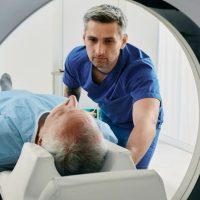
Medical imaging represents one of the more capital-intensive components of a comprehensive health screening. Accessing these services in Kuala Lumpur offers a cost-effective alternative without compromising diagnostic accuracy.
Imaging is vital because many serious medical conditions—including early-stage cancers, vascular blockages, and deep structural lesions—remain entirely asymptomatic (“silent”) in their early phases. Diagnostic imaging provides clinicians with clear visual evidence necessary to detect, stage, and treat underlying diseases before symptoms manifest.
If a health screening package allows me a choice of 1 or 2 medical imaging scans, which should I choose?
Different imaging modalities serve distinct diagnostic functions. Generally, you should select scans that address your personal health risk profile, taking into account age, lifestyle factors, personal medical history, and family history of specific conditions (e.g., cardiac disease or specific cancers).
You should always consult a qualified medical doctor prior to your screening to evaluate your individual clinical risks and determine the most appropriate diagnostic tests for your needs.