What Is Coronary Artery Disease?
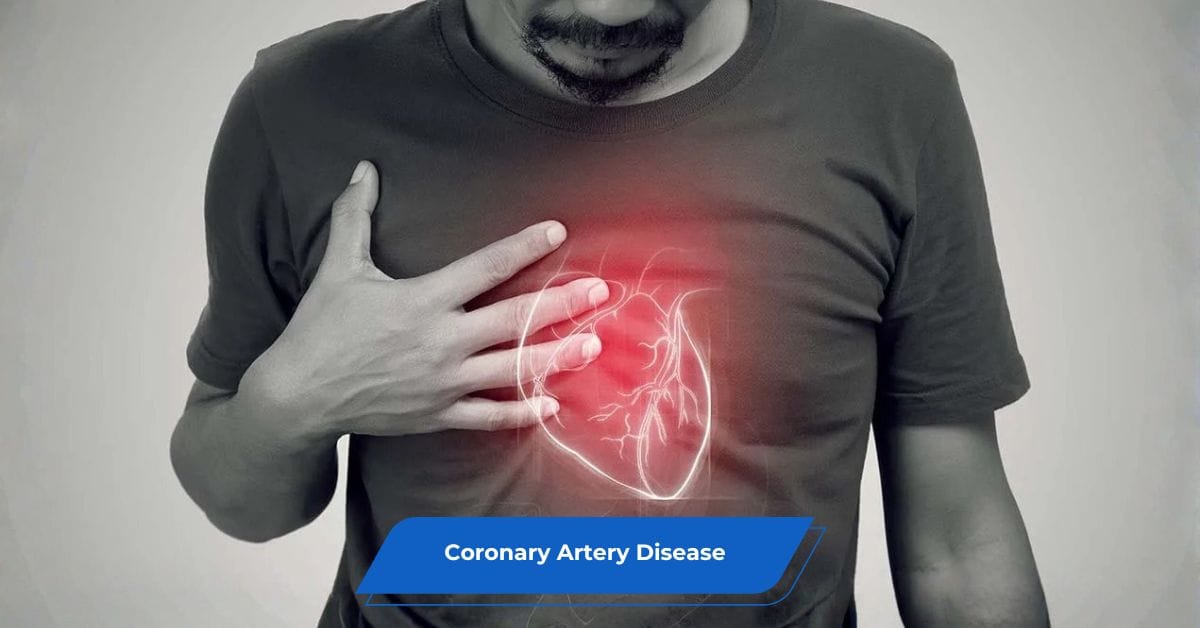
Coronary Artery Disease (CAD)—frequently referred to as ischaemic or coronary heart disease—develops when the blood vessels responsible for delivering oxygen and nutrients to the heart become constricted or stiffened by fatty plaque build-up. This gradual narrowing is a condition called atherosclerosis.
When these arterial blockages limit oxygenated blood reaching the cardiac muscle, it leads to chest pain or pressure known as angina. Should a plaque break open and create a total obstruction, it results in a sudden heart attack (acute myocardial infarction).
Back To: Heart and Vascular Main Page
CAD Prevalence in Malaysia
According to official statistics from the Department of Statistics Malaysia (DOSM), Ischaemic Heart Disease remains the single leading cause of death nationwide. It accounts for approximately 13.0% of all medically certified deaths in the country, claiming over 17,000 lives annually.
The incidence is particularly pronounced among individuals in their prime working years (aged 41 to 59), where heart disease accounts for 17.6% of total deaths. At the state level, Johor consistently records one of the highest numbers of heart disease fatalities in Malaysia—second only to Selangor—highlighting the critical need for early screening and specialised cardiovascular care across the Southern region.
What Are The Causes Of Coronary Blockages & Risk Factors?
Coronary Artery Disease is primarily caused by atherosclerosis. Several controllable and non-controllable risk factors accelerate plaque buildup within the coronary arteries:
- Smoking: Inhaling tobacco smoke damages blood vessel linings and accelerates plaque hardening.
- High Blood Pressure (Hypertension): Persistent high pressure damages arterial walls, making them prone to plaque accumulation.
- High Cholesterol: Excess low-density lipoprotein (LDL) cholesterol circulates in the blood and deposits directly onto artery walls.
- Diabetes Mellitus: Elevated blood sugar levels cause vascular inflammation and damage vessel elasticity.
- Obesity & Overweight Status: Excess body mass places additional strain on the heart and is linked to elevated cholesterol and blood pressure.
- Sedentary Lifestyle: Physical inactivity compromises cardiovascular endurance and metabolic efficiency.
- Family History: A strong genetic predisposition increases early-onset cardiovascular risk.
- Age & Gender: CAD risk rises significantly after 45 years of age for men and 55 years for women.
- Unhealthy Diet: Diets heavy in saturated fats, trans fats, refined sugars, and high sodium accelerate vascular disease.
What Are The Symptoms Of Coronary Artery Disease?
Symptoms of Coronary Artery Disease can range from subtle discomfort to severe acute pain. In early stages, arterial narrowing may produce no noticeable signs. As blockages worsen, common symptoms include:
- Chest Pain (Angina): A sensation of squeezing, pressure, heaviness, or tightness in the centre or left side of the chest, often brought on by exertion or stress.
- Shortness of Breath (Dyspnoea): Difficulty catching your breath during routine physical activities.
- Unexplained Fatigue: Deep exhaustion resulting from reduced cardiac pumping efficiency.
If a blocked artery precipitates an acute heart attack, immediate emergency medical attention is required. Heart attack symptoms include:
- Crushing chest pain or pressure feeling like an immense weight on the chest.
- Radiating pain extending to the left shoulder, arm, back, neck, or jaw.
- Cold sweats, clamminess, and severe lightheadedness or dizziness.
- Acute nausea, indigestion, or heartburn-like pain accompanied by breathlessness.
How To Prevent This Condition?
Preventing or slowing CAD progression involves key risk-factor management strategies:
- Quit Smoking: Cessation immediately improves vascular elasticity and reduces cardiac workload.
- Adopt a Heart-Healthy Diet: Focus on whole grains, fresh vegetables, lean proteins, and unsaturated fats while strictly limiting refined sugars and salt.
- Engage in Regular Aerobic Exercise: Aim for at least 150 minutes of moderate-intensity exercise (e.g., brisk walking, cycling) weekly.
- Optimise Medical Parameters: Maintain rigorous control over blood pressure, blood glucose, and lipid levels through routine medical checks and prescribed treatments.
- Maintain a Healthy Body Mass Index (BMI): Achieve a balanced weight to reduce systemic hypertension and metabolic strain.
What Are The Costs Of Screening & Testing For Coronary Artery Disease in Johor, Malaysia?
Screening and diagnostic tests for CAD in Johor range from RM 100 to RM 10,000+, depending on whether testing is non-invasive or invasive:
| Screening / Diagnostic Test | Function & Description | Estimated Cost (Private Sector – MYR)* |
| Blood Tests (Lipid & Diabetic Panel) | Evaluates cardiovascular risk factors including full lipid profiles (LDL, HDL, triglycerides), HbA1c, and high-sensitivity C-reactive protein (hs-CRP). | RM 100 – RM 300 |
| Resting Electrocardiogram (ECG) | Records the heart’s electrical activity to detect rhythm disturbances, muscle strain, or previous silent heart damage. | RM 100 – RM 300 |
| Treadmill Stress Test | Evaluates how the heart performs under exercise-induced stress, revealing exercise-induced ischaemia. | RM 200 – RM 400 |
| CT Calcium Score | Employs low-dose computed tomography to measure calcified plaque build-up in the coronary arteries. | RM 300 – RM 800 |
| Echocardiogram (ECHO) | Uses ultrasound technology to assess cardiac wall motion, valve integrity, and overall ejection fraction. | RM 300 – RM 600 |
| CT Coronary Angiography (CTCA) | Utilises non-invasive multi-slice CT scanning with IV contrast dye to generate detailed 3D maps of coronary arteries. | RM 2,000 – RM 3,000 |
| Invasive Coronary Angiography | A catheterisation procedure performing direct contrast injection under fluoroscopy to pinpoint severe structural blockages. | RM 3,500 – RM 10,000+ (Excludes facility and specialist consultation fees) |
*Note: Estimated prices reflect private healthcare facilities in Johor for 2026. Costs vary based on hospital setup, sub-specialist fees, and complexity. Please confirm directly with your chosen healthcare centre.
Which Doctor For Treatment Of Coronary Artery Disease?
Managing CAD involves a multidisciplinary team of cardiac specialists:
1. General Cardiologist
A General Cardiologist provides initial consultations, clinical diagnoses, and medical risk stratification. They evaluate symptoms, order diagnostic imaging (e.g., stress tests, CTCA), and prescribe medical therapies like statins and antiplatelet drugs alongside lifestyle interventions.
2. Interventional Cardiologist
When testing reveals critical coronary blockages requiring physical opening, patients are referred to an Interventional Cardiologist. These doctors perform catheter-based interventions under local anaesthesia:
- Percutaneous Coronary Intervention (PCI) / Angioplasty: Threading a thin catheter via the wrist or groin to inflate a micro-balloon inside clogged arteries.
- Coronary Stent Implantation: Deploying drug-eluting stents (DES) to scaffold the vessel wall permanently and prevent re-narrowing (restenosis).
3. Cardiothoracic Surgeon
In cases involving severe multi-vessel blockages, complex bifurcation lesions, or left main artery disease, catheter intervention may be insufficient. A Cardiothoracic Surgeon performs open-chest surgical revascularisation:
- Coronary Artery Bypass Grafting (CABG): Crafting alternative vascular channels using healthy arteries or veins harvested from the chest, arm, or leg to bypass blocked coronary segments.
4. Preventive & Cardiac Rehabilitation Specialist
Following interventions or cardiac surgery, rehabilitation experts guide long-term recovery through structured exercise programmes, dietary therapy, and lifestyle modification to prevent secondary disease events.
Resources To Help You Find A Doctor
- Top 10 Cardiologists in Johor: 365Asia List
- Best Cardiologists In Johor: 365Asia List
- Find A Doctor for Cardiology in Johor for Coronary Artery Disease, Arrhythmia and Heart Failure 2026
Which Hospitals And Medical Centres Are There For Screening & Treatment?
Patients seeking CAD diagnosis and treatment in Johor can access facilities across both private healthcare systems and public tertiary centers:
- KPJ Johor Specialist Hospital (Johor Bahru): A primary tertiary private medical institution offering catheterisation lab facilities, diagnostic CT coronary angiography, and interventional cardiology.
- Gleneagles Hospital Medini Johor (Iskandar Puteri): A multi-specialty hospital equipped with advanced cardiac diagnostics, intensive care units, and interventional suites catering to domestic patients and international visitors.
- Regal Hospital / Regency Specialist Hospital: Provides comprehensive cardiovascular diagnostic services, including treadmill testing, echocardiography, CT scanning, and interventional procedures.
- Columbia Asia Hospital (Iskandar Puteri & Tebrau): Regional private centers delivering acute emergency care, diagnostic cardiac screening, and outpatient cardiology consultations.
- Hospital Sultanah Aminah (HSA, Johor Bahru): The primary public tertiary referral hospital in Johor, providing public cardiology services, coronary care unit (CCU) management, and invasive procedures.
What Is The Cost Of Coronary Artery Disease Treatment In Johor, Malaysia?
The general cost ranges for coronary artery disease interventions in private hospitals across Johor are outlined below:
| Treatment / Procedure | Description & Clinical Purpose | Estimated Cost Range (Private Sector – MYR)* |
| Medical Therapy & Outpatient Care | Antiplatelet medications (e.g., Aspirin, Clopidogrel), statins, beta-blockers, and antihypertensives for long-term control. | RM 150 – RM 600 per month |
| Percutaneous Coronary Intervention (PCI / Angioplasty) | Minimally invasive catheterisation placing balloon-expandable drug-eluting stents (DES) to restore arterial patency. | RM 15,000 – RM 50,000 (Varies depending on total stents deployed) |
| Coronary Artery Bypass Grafting (CABG Surgery) | Major open-heart surgery harvesting healthy bypass grafts to restore coronary blood flow around multiple blockages. | RM 75,000 – RM 100,000+ (Higher for extended ICU stays or complex cases) |
*Note: Figures reflect private hospital charges in Johor for 2026. Total costs depend on surgeon fees, anaesthetist charges, length of stay, and implant types used.
Key CAD Treatment Modalities
Coronary Artery Disease management focuses on symptom reduction, halting plaque progression, and preventing myocardial infarction:
1. Medical Management
- Antiplatelet Agents: Drugs such as aspirin or clopidogrel reduce blood clot risk over plaque formations.
- Statins (HMG-CoA Reductase Inhibitors): Lower LDL cholesterol and assist in stabilizing existing arterial plaque.
- Beta-Blockers & Calcium Channel Blockers: Reduce myocardial oxygen demand by slowing heart rate and lowering blood pressure.
- ACE Inhibitors / ARBs: Relax vascular walls and protect cardiac structural function, particularly post-heart attack.
2. Revascularisation Procedures
- Angioplasty & Stenting: Performed under local anaesthesia with mild sedation via radial (wrist) or femoral (groin) access. Patients typically recover quickly, spending 1 to 2 days in hospital.
- Coronary Artery Bypass Surgery (CABG): Performed under general anaesthesia. The surgical team bypasses severe narrowings using arterial or venous conduits. Inpatient stays typically range from 5 to 8 days, followed by structured home rehabilitation.
What Are The Insurance And Financing Considerations For This Condition?
Private Medical & Health Insurance
- Medical Cards (Hospitalisation & Surgical): Private health insurance policies issued in Malaysia cover inpatient hospitalisation, surgeon fees, operating theatre costs, and cardiac implants (e.g., drug-eluting stents) up to designated annual and lifetime limits. Pre-authorisation or a Guarantee Letter (GL) from your insurer is typically required prior to elective angioplasty or CABG.
- Critical Illness (CI) Policies: Critical Illness policies issue a direct lump-sum cash payout upon diagnosis of covered major cardiac events (e.g., acute heart attack or open-heart bypass surgery). These funds can replace lost income, cover rehabilitation costs, or clear out-of-pocket expenses.
Public Sector Healthcare Subsidies
Malaysian citizens accessing public healthcare facilities (such as Hospital Sultanah Aminah) receive heavy government subsidies under the Ministry of Health (MOH). Basic diagnostic tests, inpatient stays, and surgeries are heavily subsidised, though waiting lists apply for non-emergency procedures, and specialised implants may require co-funding.
Employees Provident Fund (EPF / KWSP)
Under EPF Health Withdrawal (Akaun Sejahtera / Account 2), EPF members can withdraw accumulated savings to cover critical illness medical expenses for themselves or immediate family members (parents, spouse, children) if private medical card limits are exceeded or unavailable.
Find A Financial Adviser
Navigating medical insurance claims, policy riders, Guarantee Letters, and hospital deposit requirements can be complex during a medical emergency.
If you are looking for a financial adviser to help navigate the complexities of insurance claims and financial planner for medical contingencies, you can consider our Preferred Financial Adviser partners:



Featured Doctor - Dr Yee Sze-Voon
FAQs
Why is Coronary Artery Disease known as a “silent killer”?
CAD often develops gradually over decades without causing obvious discomfort. Fatty plaque can build up silently inside the arteries until a critical restriction occurs or a plaque ruptures, triggering a sudden, unexpected heart attack. Early cardiac screening is the primary way to detect asymptomatic CAD.
Can Coronary Artery Disease be reversed through lifestyle changes alone?
Established anatomical plaque cannot be completely erased through lifestyle changes alone. However, strict lifestyle adjustments—such as a low-fat diet, regular exercise, and tobacco cessation—combined with lipid-lowering medications (like statins) can stabilize existing plaque, prevent further arterial narrowing, and significantly reduce heart attack risk.
How often should I undergo heart screening in Johor if I have no symptoms?
Asymptomatic adults aged 40 and above—or younger individuals with risk factors like hypertension, high cholesterol, diabetes, or a family history of heart disease—should schedule a basic cardiovascular assessment annually. Advanced tests, such as a CT Calcium Score or CT Coronary Angiogram, are typically recommended every 3 to 5 years based on individual risk profiles and specialist advice.
How do doctors decide between stenting (PCI) and bypass surgery (CABG)?
Decisions are made by a multidisciplinary cardiac team based on detailed imaging:
- Angioplasty with Stenting (PCI): Preferred for isolated single-vessel or two-vessel blockages with straightforward anatomy. It is minimally invasive, performed under local anaesthesia, and requires a shorter hospital stay (1 to 2 days).
- Bypass Surgery (CABG): Recommended for multi-vessel CAD, severe diabetic microvascular disease, or critical blockages in the left main coronary artery. CABG requires open surgery under general anaesthesia and a longer recovery period (5 to 7 days in hospital).
Contact Us For An Appointment
If you or a loved one require a cardiovascular assessment, diagnostic imaging, or a second opinion with a senior heart specialist in Johor, Malaysia, we can help with an appointment. Contact us via the button below.
Additional Resources
- Heart Disease Malaysia: Risks & Prevention | Pantai Hospitals.
- Cardiovascular Disease Scorecards – Malaysia | World Heart Federation.
- Explainer: Malaysia’s top killer — Heart disease | NST Online.
- Malaysia – WHO Data | World Health Organization (WHO).
All content on this site is informative only and is not intended to be a substitute for professional medical advice,
diagnosis, or treatment, and should never be relied upon for specific medical advice.
If you are experiencing a medical emergency, call 999 immediately or go to the nearest Accident & Emergency department.
365Asia is a member of Group 365Asia.