When a cardiologist recommends a heart stent or coronary angioplasty, patients and their families naturally want clear, practical answers before proceeding: How much will the treatment cost? How is the procedure carried out? How long is the hospital stay, and when can normal daily activities resume?
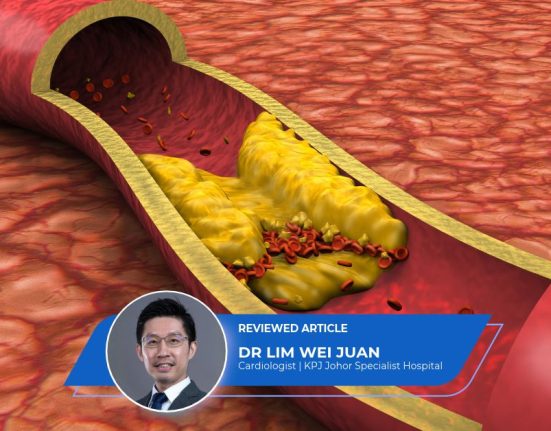
In Johor, particularly across private medical centres in Johor Bahru, percutaneous coronary intervention (PCI), commonly known as coronary angioplasty, is an established minimally invasive treatment used to improve blood flow through narrowed or blocked coronary arteries in appropriately selected patients.
This article explains what the procedure involves, factors affecting private hospital costs in Johor, expected recovery considerations and important preparation steps for patients considering cardiac treatment.
Learn more: Heart and Vascular Disease in Malaysia
What Happens During a Heart Stent Procedure (Wrist vs. Groin Entry)
Coronary angioplasty is performed in a specialised cardiac catheterisation laboratory (cath lab). The procedure usually involves local anaesthesia at the catheter insertion site. Patients are generally awake during the procedure, although sedation may be given when clinically appropriate.
The procedure typically takes between 30 minutes and two hours, although complex interventions may take longer.
Step-by-Step Overview
- Access Site Preparation: The cardiologist numbs the skin over an entry artery using local anaesthetic before inserting a thin, flexible sheath.
- Catheter Guidance: Using X-ray imaging (fluoroscopy) and contrast dye, a guidewire and catheter are directed through the blood vessels towards the affected coronary artery.
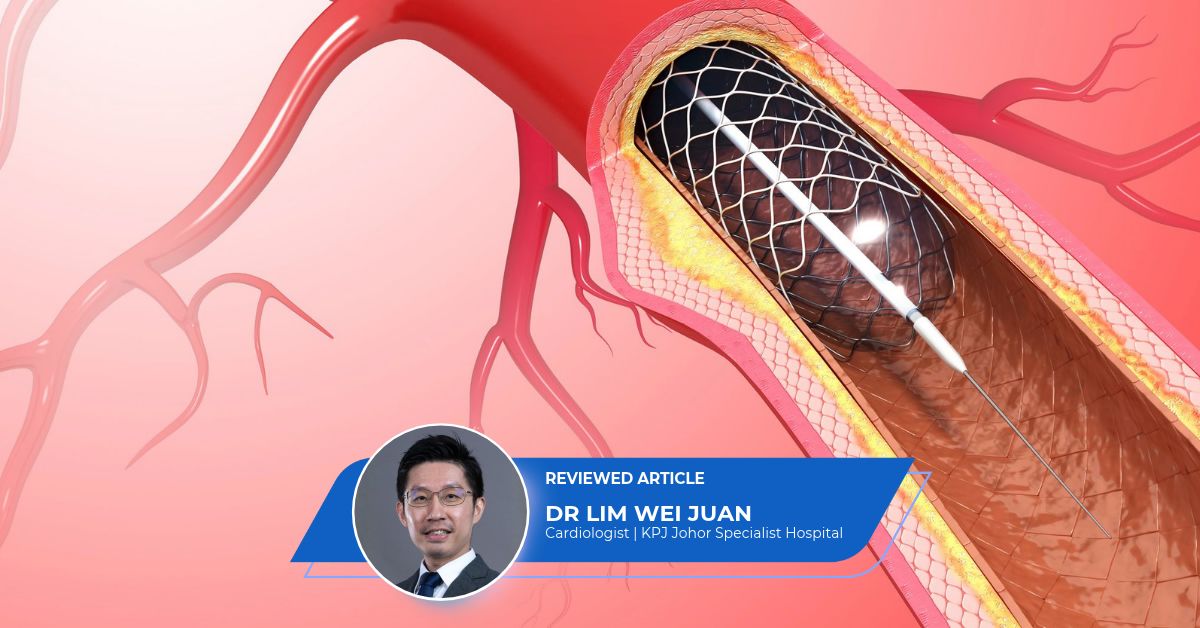
- Balloon Inflation: A small balloon is positioned across the narrowed section and inflated to widen the artery.
- Stent Deployment: Where indicated, an expandable wire-mesh tube, usually a drug-eluting stent (DES), is deployed to help keep the artery open. The stent releases medication to reduce the risk of tissue growth that could cause the treated section to narrow again.
- Closure and Bleeding Control: The catheter and guidewire are withdrawn. A compression device, manual pressure or an appropriate vascular closure device is used to control bleeding at the insertion site.
A coronary angiogram is a diagnostic procedure that identifies narrowed or blocked coronary arteries using contrast dye and X-ray imaging. Angioplasty is a treatment procedure that may be performed during the same session when clinically appropriate.
Wrist (Radial) vs. Groin (Femoral) Access
Cardiologists can access the coronary arteries through the radial artery in the wrist or the femoral artery in the groin.
| Feature | Wrist Entry (Radial Access) | Groin Entry (Femoral Access) |
| Access blood vessel | Radial artery at the wrist | Femoral artery in the groin |
| Post-procedure mobility | Usually allows earlier sitting up and walking | Patients may need to lie flat for a period following the procedure |
| Bleeding risk | Generally lower risk of access-site bleeding | Generally higher risk of access-site bleeding |
| Clinical suitability | Preferred approach for most PCI procedures when suitable | May be used when radial access is unsuitable or procedural requirements favour femoral access |
The choice of access site depends on the patient’s anatomy, clinical condition, procedural requirements and the cardiologist’s assessment.
Angioplasty & Diagnostic Package Costs in Johor Bahru
Private cardiac treatment costs in Johor depend on whether a patient requires initial diagnostic investigations, a diagnostic coronary angiogram or therapeutic angioplasty with stenting.
A coronary angiogram is a diagnostic procedure that uses contrast dye and X-ray imaging to identify narrowed or blocked coronary arteries. Coronary angioplasty, on the other hand, is a treatment procedure that uses a balloon and, where appropriate, a stent to improve blood flow through the affected artery. These are separate procedures, although angioplasty may be performed during the same session as a diagnostic angiogram when clinically appropriate.
Indicative Private Hospital Charges in Johor (2026)
| Procedure / Investigation | Typical Estimated Cost (RM) | Scope and Notes |
| Basic Cardiac Screening (ECG, treadmill stress test, echocardiogram) | RM600 to RM1,188+ | Individual outpatient tests or combined cardiac screening packages. |
| CT Coronary Angiogram (CTCA) | RM2,000–RM3,000+ | Non-invasive CT imaging to assess the coronary arteries. Package inclusions may vary. |
| Invasive Coronary Angiogram (Diagnostic) | RM6,000–RM12,000+ | Catheter-based diagnostic procedure performed in a cardiac catheterisation laboratory. Charges may include specialist fees and hospitalisation. |
| Coronary Angioplasty with Stenting (PCI) | RM25,000–RM40,000+ | Published online estimates for angioplasty with stenting in Johor’s private healthcare sector. Actual charges depend on the treatment required. |
Disclaimer: All figures serve as an indicative financial guide rather than a guaranteed quotation. Final charges depend on individual clinical requirements, hospital facilities and the exact treatment provided.
Factors That Influence Your Final Hospital Bill
Even when hospitals publish baseline package rates, the final bill for an individual patient may vary depending on several clinical and operational factors:
- Diagnostic vs. Therapeutic Scope: Whether the procedure involves diagnostic angiography alone or proceeds to angioplasty and stent implantation during the same session.
- Number and Type of Stents: Costs may increase if multiple narrowed vessels require more than one stent. Drug-eluting stents (DES) are commonly used in contemporary PCI.
- Case Complexity: Heavily calcified blockages or complex lesions may require specialised equipment, plaque-modification devices or intracoronary imaging, such as intravascular ultrasound (IVUS) or optical coherence tomography (OCT).
- Hospitalisation and Room Category: The length of hospital stay, including day-ward recovery, overnight observation or a longer admission, may affect the total bill.
- Professional and Ancillary Fees: Cardiologist fees, anaesthetist fees where applicable, laboratory investigations, medications and follow-up consultations may contribute to the final charges.
Patients, whether self-paying or using corporate medical insurance, should request an itemised financial estimate directly from their chosen hospital. This is particularly important when comparing diagnostic angiography packages with the total cost of angioplasty and stenting.
Hospital Stay Duration and Post-Stent Recovery Timeline
Coronary angioplasty is not open-heart surgery. However, the length of hospitalisation and recovery varies according to the patient’s condition, the complexity of the procedure and whether complications occur.
Hospital Stay Duration
Planned (Elective) Angioplasty: Selected patients who undergo an uncomplicated planned procedure may be discharged on the same day or following an overnight stay, depending on their clinical condition and hospital protocol.
Emergency Angioplasty (Heart Attack): Patients undergoing emergency angioplasty following a heart attack may require a longer hospital admission for cardiac monitoring, assessment of heart function and management of associated complications.
Typical Recovery Considerations at Home
- First 24 to 48 Hours: Follow the discharge instructions provided by the hospital. Keep the catheter insertion site clean and observe it for bleeding, swelling or other changes. Arrange for someone to take you home.
- Days 3 to 7: Gradually resume light daily activities as advised. Avoid strenuous exercise and heavy lifting until the access site has healed and the medical team confirms that these activities are appropriate.
- Week 1 Onwards: Some patients who undergo uncomplicated planned angioplasty may return to desk-based work and driving after approximately one week, subject to medical advice and applicable driving requirements.
- Following Weeks: Gradually increase physical activity according to the cardiologist’s recommendations. Cardiac rehabilitation may be advised to support recovery and long-term cardiovascular health.
Patients recovering from a heart attack or a complicated procedure may need a longer recovery period.
Clinical Insights: Patient Preparation and Post-Procedure Care
Preparation before coronary angioplasty and appropriate care afterwards are important parts of the treatment process. Patients should understand their medication instructions, follow the hospital’s preparation requirements and attend scheduled follow-up appointments.
Before the Procedure
- Fasting Requirements: Fasting instructions depend on the hospital’s protocol, the planned procedure and whether sedation is required. Patients should follow the specific instructions provided by their cardiology team.
- Medication Review: Inform the cardiologist about all current medications, including anticoagulants, antiplatelet drugs and diabetes medications such as metformin. The medical team will determine whether any adjustments are required. Patients should not stop prescribed medication without medical advice.
- Allergy and Kidney Function Screening: Inform the medical team of any previous reactions to contrast media, particularly iodinated contrast agents, and disclose other relevant allergies. Kidney function may also be assessed before the procedure because contrast media can pose additional risks for some patients with impaired kidney function.
After Stent Placement
- Dual Antiplatelet Therapy (DAPT): Following coronary stent implantation, patients are generally prescribed antiplatelet medication to reduce the risk of blood clots forming inside the stent. This commonly involves aspirin combined with another antiplatelet medication, such as clopidogrel, ticagrelor or prasugrel. The duration depends on the reason for the procedure and the patient’s individual bleeding and clotting risks. For patients with acute coronary syndrome, 12 months is the default recommended duration unless individual circumstances require an alternative approach. Patients must not stop or change their medication without consulting their cardiologist.
- Secondary Prevention: Long-term cardiovascular risk reduction involves managing cholesterol levels, blood pressure and blood glucose, stopping smoking, following a heart-healthy diet and maintaining appropriate physical activity. Statins are commonly prescribed to lower LDL cholesterol, with treatment tailored to the patient’s cardiovascular risk and clinical condition.
- When to Seek Medical Attention: Contact the hospital or cardiology team if you notice increasing swelling, pain, redness or discharge around the catheter insertion site. Seek emergency medical attention for persistent or severe chest pain, significant shortness of breath, uncontrolled bleeding or sudden coldness, numbness or discolouration of the affected arm or leg. In Malaysia, call 999 for a medical emergency.
Cardiologists in Johor You May Consider
Choosing the right specialist is an important step in your cardiac evaluation and treatment. Cardiologists in Johor you may consider for consultation and treatment:
- Dr Lim Wei Juan is a Consultant Cardiologist and Physician at KPJ Johor Specialist Hospital with extensive clinical experience in internal medicine and cardiovascular care. He subspecialises in complex coronary interventions, advanced intracoronary imaging, and complex revascularisation.



Featured Doctor - Dr Yee Sze-Voon
For inquiries or for an introduction to a specialist, contact us below.
Frequently Asked Questions (FAQs)
1. Is coronary angioplasty painful?
The procedure is performed under local anaesthesia to numb the wrist or groin insertion site. Patients are generally awake, although sedation may be provided when appropriate. Some may experience pressure or discomfort during catheter insertion, or a temporary warm sensation when contrast dye is injected. Chest discomfort may also occur briefly when the balloon is inflated.
2. How much does a heart stent procedure cost in Johor Bahru?
The cost of coronary angioplasty with stenting at private hospitals in Johor Bahru varies according to the number of stents required, procedural complexity, hospital charges, specialist fees and length of hospitalisation. Patients should request an itemised estimate from their chosen hospital following clinical assessment.
3. How long do I need to stay in the hospital after getting a stent?
Selected patients undergoing uncomplicated planned angioplasty may be discharged on the same day or after an overnight stay. Patients treated following a heart attack may require a longer admission depending on their heart function, clinical condition and recovery progress.
4. When can I drive and return to work after angioplasty?
Some patients who undergo uncomplicated planned angioplasty may resume driving and desk-based work after approximately one week. However, the timing depends on the access site, recovery progress, the nature of their work and applicable driving requirements. Patients recovering from a heart attack may need several weeks or longer before returning to their usual activities. Always seek medical clearance.
5. Do heart stents need to be replaced after a few years?
No. Most modern coronary stents are permanent implants designed to remain inside the artery. The artery’s inner lining gradually grows over the stent, covering its surface. However, the treated artery can narrow again, and coronary artery disease may progress in other blood vessels. Prescribed medication, follow-up appointments and long-term cardiovascular risk management remain important after stent placement.

This medical content has been reviewed by Dr Lim Wei Juan, a Consultant Cardiologist and Physician at KPJ Johor Specialist Hospital with extensive clinical experience in internal medicine and cardiovascular care. He subspecialises in complex coronary interventions, advanced intracoronary imaging, and complex revascularisation.
All content on this site is informative only and is not intended to be a substitute for professional medical advice,
diagnosis, or treatment, and should never be relied upon for specific medical advice.
If you are experiencing a medical emergency, call 999 immediately or go to the nearest Accident & Emergency department.
365Asia is a member of Group 365Asia.